Monday, September 9, 2013

Ry Cooder On Little Village


At home in the Village


Ry Cooder has all kinds of stories to tell and a down-home, almost cowboy-ish drawl to wrap around them. He recounts how it was when he traded riffs on the slide guitar with the Rolling Stones, Little Feat and Captain Beefheart; recalls a mechanic, "a real south- western character", he met on a recent video shoot; breezily describes what it's like to spend half your life and all your career being adored by the few and ignored by the many.

Cooder's most poignant story, though, concerns his son. "Things got to the point a few years ago where I would spend days at home in my studio tinkering with my guitars and amps. And my 13-year-old came up to me one day and said, 'Dad, you don't really play any more, you just mess about with your equipment.' And I thought, 'Damn! he's right. What's that all about? Is there any future?' "

As it happens there was, and its time has come. Little Village, a quartet of musician's musicians comprising Cooder, John Hiatt, the English bass player Nick Lowe and the drummer Jim Keltner, release their first album tomorrow on WEA (WX462, all formats) and are set to play some British dates next week. There is very little point trying to hype four middle-aged roots-rockers who combine musical quality and experience with such an absolute lack of glamour. Calling Little Village the first authentic supergroup of the 1990s is a statement of fact that cannot add to the devotion their individual names already inspire. Particularly, as far as the British audience is concerned, that of Ry Cooder.

Although fairly famous, he is nothing like as famous as he should have been. In 1969, Cooder, a guest slide-guitarist on the Sticky Fingers album, was tipped to replace Brian Jones in the Rolling Stones. He was further credited with having made up the guitar riff to Honky Tonk Women. That he now insists: "Oh man, it wasn't my tuning or chord progression -- I got it from John Lee Hooker" says as much about his deep respect for tradition as it does about his self-promotional acumen.

A dozen albums and film soundtracks -- most notably for Paris, Texas -- later, the adventures of 44-year-old Cooder in the folk- blues field have become difficult to get into focus. Comments such as "l have a thimbleful of ambition. I can't plan a trip to the grocery store, let alone a career" may explain his overall lack of strategy. "People either phone up, or they don't" hardly sounds like the smart path to fame and riches, either. But the long gap between Cooder's 1982 solo album The Slide Area and 1987's Get Rhythm, and the near silence since, have implied more than just a lack of forward planning.

By his own admission, Cooder became "disillusioned" with himself professionally. "When I did Get Rhythm, I said, 'This is it for me.' I got a group of musicians together for one last fling, but I knew I couldn't sustain it economically. It had become like this great whirling dervish. A millionaire's hobby. And I despise that idea. Music has to serve the community in some way. 'Cos if your than" doesn't fit in, you're grinding yourself to pulp see. I felt alienated, horrible. And that spills over into your music and your ability to express yourself. So I said, 'No more of this.' "

A was past the roadblock was suggested by Lenny Waronker, one of Cooder's long-term admirers, a former record producer and now senior executive at Warner Records in Burbank, California. What Cooder needed, Waronker felt, was a proper band, preferably the one that had assembled briefly to help the American singer-songwriter John Hiatt make his 1988 album Bring the Family.

"I've never been in a band before," Cooder reveals. rather surprisingly. Although he starred on their debut album, Safe As Milk, he was only temping in Captain Beefheart's Magic Band, because their regular guitarist had had a "nervous breakdown". Likewise, his involvement with Little Feat. Cooder, the Mr Fixit of the Los Angeles blues fraternity, has played for everybody but not, in his mind anyway, with them.

"Bands generally don't get along. First thing they do is fight, last thing they do is fight. In between something happens. Maybe. Beefheart and those guys fought like cat and dog all the time, never did much of anything else. Plus, I can't stand the indecision, the lack of focus." However, Cooder always knew that a lot of his favourite R&B music -- Jimmy Reed's, say, or Sonny Boy Williamson's -- had been created by these unstable coalitions: "I used to wonder: 'Will that beautiful marriage of orchestrated sounds ever happen to me? I guess not.' "

He guessed wrong. Sitting in Waronker's Burbank office with Keltner and Lowe, Cooder does nearly all the talking and sounds like a man on honeymoon. He points to his chest -- "I can be fooled anywhere else but not there. It's all I got left" -- and describes a buzzing sensation he gets when Little Village hit their stride. "This is a real unit. You can play with a room full of people but your ear is listening for something else. You have an instinct as a musician. You have to know."

As is his folksy way, Cooder gradually talks Little Village into a story. "Jim and I have known each other man and boy now for 20 years, so he comes over to the little itty bitty studio in my home in Santa Monica, and . . . ding, twang . . . it's as simple as that. And then John [Hiatt], he's the pictures guy. He looks down on the ding twang and he says, 'The guy gets into the car, the girl gets out of the car and it goes like this. OK, book a studio engineer.' " The bass guitar, Cooder reveals, has been another of those things that put him off bands in the past. "Plugging the holes was always a problem. Nick hasn't fixed it, but at least now there's a floor."

Little Village, the album, comes across as very much a Cooder-Hiatt affair. It is a richly flavoured stew whose principal ingredients -- spry Southern funk, keening Tex-Mex ballads and the best slide-guitar work since Get Rhythm -- are enhanced by strong tunes and Hiatt's belting delivery of them. "I've played behind some incredible singers, man," Cooder says, "but when John sings those ballads, he moves some air around. For a white guy, he can really holler. Voice like a big trumpet."

The obvious thing to say about the Little Village album is that it sounds as though everybody's having a great time. Cooder, a veteran of too many unremembered jam sessions, bridles at this. "It's not enough to say, 'Well, we sure had a ball.' I caught myself saying that and it's not true. You may have been touched for a minute; that's interesting, it's luck actually, but you've got to turn that into product. 'Cos Lord, you gotta make some money some time."

So will he, finally? "Nothing is known. It's a case of don't quit your day job. There's business bands, organised bands, bands that bin together since they were four years old, bands with leaders who hired you. We're just a musical band, where you don't lead or follow, you just play. To be really successful as well," Cooder sighs and smiles, '`it's almost too much to ask."


The Sunday Times (UK) 16th February 1992


Jim Keltner: His Time Is Tight


 His Time Is Tight
 
Jim Keltner has drummed for everybody from Bob Dylan to Steely Dan to Ry Cooder; he drives a lot of the better rock albums you own even when he goes unaccredited. His cunning discretion colors two of this year's better CDs: Lucinda Williams - Essence and Neil Young - Road Rock. 
  
Studio musicians pride themselves on anonymity. Hal Blaine, the great '60s drummer, played on sessions for the Byrds, the Beach Boys, the Monkees, and many others. Yet solid as he was, you'd be hard pressed to figure out which tracks he did or didn't play on. His job was crucial: in a single session, reading sheet music for the first or second time, he laid down a rhythmic bedding against which the others defined themselves. A crack session ace like Blaine is the canvass to which producers add paint.


But there is a breed of session player that stands apart. These musicians cultivate a recognizable sound, and add nuance to projects that might otherwise sound flat. Jim Keltner, a top studio drummer for the past 30 years, has power, subtlety, and good taste. If his name appears on a recording, it's a good bet you'll want to hear it.

Keltner started out in the L.A. recording scene right as the Beatles were breaking up, and met up with his hero Ringo Starr at the Concert for Bangladesh, where they gleefully double-drummed (a terrifically difficult task). Since then he's drummed for everybody from Bob Dylan to Steely Dan to Ry Cooder; he drives a lot of the better rock albums you own even when he goes unaccredited.

Session players are in the service industry; they have to accommodate every imaginable style to suit every employer taste. Keltner does this while constantly refining his cunning, discrete sound. This past year he colored two such distinct sessions you'd never guess the same player was behind them both: Lucinda Williams's Essence, and Neil Young's Road Rock. (A partial list of the sides Keltner's played on in the past season include Jon Brion's Meaningless, Peter Case's Blue Guitar, The Charlatans UK's Wonderland, Cracker's Garage d'Or, Dion's Born to Be With You/Streetheart, Neil Finn's One Nil, and Rufus Wainwright's Poses.)

To begin with, Keltner's "time" is both fluid and firm. "Time" is that elusive steadiness all drummers seek, so elusive that many producers simply hook up a "click track" to a drummer's headphones and make them play along to a digital metronome. It's a big part of what makes today's slick contemporary sounds so stiff. "We never used a click track in the old days," Ringo Starr once said. "We did okay." Through the infinitely subtle way he controls the beat by pushing and pulling against it, Keltner can make a click track sound like a human pulse: steady, yet flexible. (The other great click track wizard is Rolling Stone Charlie Watts, with whom Keltner collaborated on an ambitious but ultimately out-of-reach project last year.)

Keltner's drumming is poetic; however simple, his patterns always send off more than one message at a time. On Williams's "Get Right With God," his patterns rise above the typical bass, snare, and hi-hat clich¿s; he gives you something to listen to beyond mere rhythm, without drawing undo attention to himself. This track would challenge any drummer to give the static rhythm a sense of shape, movement, and purpose. Keltner creates curves in the sound, gives the others a sense of where to land, and which accents can work as pivots. Half of the pleasure in listening to him lies in the sheer confidence he inspires from the others, including Williams's raspy vocal. The other half lies in the ongoing sense of anticipation he creates, the aura of the unexpected that hovers in the air even when nothing special is happening.

A show-off drummer would have enough trouble toning down for a Lucinda Williams session¿her songwriting calls for interior moods. But to hear the same Keltner bash his way through a thrilling set behind Neil Young makes you marvel at how much his ears embrace. Even when he starts soloing behind Neil Young's ravenous guitar in "Cowgirl in the Sand," a song you thought you were familiar with, he traces an intangible line between utter control and utter abandon. The challenge here is completely different: to make yet another live Neil Young effort sound fresh through songs that have become second nature. Keltner's choices here are uncanny: he's not pushing the music forward so much as pulling it more into itself, like the whirlpool at the center of a vortex. He can lope along with the song's lopsided verve, awash in its dismay, and then build to refrain-ending flourishes that have no right to fit into the small spaces he squeezes them in. As barbed and chaotic as Young's guitar playing is, you can get just as many thrills from Keltner's tidal control and release.

When Neil Young appeared on the Tribute to Heroes telethon on September 21st, he sang John Lennon's "Imagine" with a fearsome tenderness. That was Jim Keltner on drums, supporting the song's vast ambition with a decisive rhythmic spine, the same way he did on the original session. When singers want deeply felt definition, contour, and color from a stickman, they know who to call.


First published at publicbroadcasting.net, January 2002


Bobby Whitlock On Jim Keltner


Carl Wiser (Songfacts): How did you end up in Derek and the Dominos?

Bobby Whitlock: I was with Delaney And Bonnie and them. I was the last one to leave that organization. Everybody else did (Joe Cocker's album) Mad Dogs & Englishmen. I stayed with them and helped them do a couple more albums. Then the pressure got to be too much and Steve Cropper suggested I go see Eric and see what he's doing. He actually bought my ticket to England. I called Eric and said, "Hey, what are you up to," and he said, "I'm just getting my hair cut." I said, "I need to get out of here, is it all right if I come visit?" He said, "Sure, come on over," so I was over there 2 days later. I was just hanging with him, we got around to picking and singing, and the next thing I know, we decided to put a group together. He and I were writing, it just happened real natural for us because we already had a friendship developed through the Delaney And Bonnie thing. He went on the road with us. We already had a friendship going, so us sitting around writing, playing and singing was not uncommon. I was staying at his country house at Heartwood Edge in Surrey. I knew George. George went out for a couple of dates with us when we were on tour with Eric. George, Paul and them had broken up. I was friends with George when all this was happening. He was playing me the songs he wanted to do on his record. Eric's ex-wife, I used to go with her sister, so that's another way I was hooked up with George. I spent a lot of time out there at Friar Park. George plays me all this stuff. He wanted to do his first record after The Beatles - he never got to do his own stuff, just one song on each album. He wanted to know what Eric and I thought about putting a band together for his album. Eric and I were already talking about it, and we had already talked about having Jim Keltner come over and be in our band. Keltner was the original drummer, and Carl Radle. They were out on tour, they were still doing Mad Dogs. It turns out Jim Gordon and Carl come storming in from the Mad Dogs & Englishmen thing. We started right in on the session. I made a call, I called Carl Radle and Jim Keltner. Keltner was on the road with Gabor Szabo, and Carl Radle was on the road with Leon and them. I talked to Keltner, and Keltner was going to come over when he got finished, but Jim Gordon got finished with that Mad Dogs thing and he stormed right on over and was in on it right away. The availability was there for a drummer, and Jim Gordon seized the moment. Keltner said Jim Gordon's been taking some pretty important gigs from him in Derek And The Dominoes and All Things Must Pass. He was there and the need was immediate, so he filled the slot. The Dominoes were formed during the recording of All Things Must Pass. Carl and Jim wound up coming out to Eric's at Heartwood Edge and we stayed out there and rehearsed. That got to be too much, so we got the Domino flat in town on 33 Turlough Street. We got out of Eric's place and the 3 of us were in downtown London raising all manner of hell and unrest.

We toured all over England. We did a club tour, and no ticket was over a pound. It was all word of mouth. We played the Speakeasy in London and The Marquee Club, then we played some really funky places up in Nottingham and Plymouth and Bornmouth - we went all over Great Britain. Here we were, these so called "big rock stars," and we were playing these funky places that would hold like 200 people. Of course, people were jam packed and spilling out on the streets and stuff. It was pretty wild, it was a great time.

We did this one tour, we rode around in Eric's Mercedes. We were all crammed in one car. The second time we went out in Great Britain, we upscaled it. We played small concert venues. Our first concert venue was the Lyceum Ballroom, a concert for Doctor Spock, the baby doctor. It was a benefit for his foundation. That was our real first concert. Dave Mason was in on it - he was a Domino for a day. Then we went and did other venues that were like one step up - Royal Albert Hall and places like that. We went down to Miami, recorded the Layla album and went on tour in the United States. We preceded the record for the most part. All Things Must Pass Came Out, it was a big record, "My Sweet Lord" was #1. We were on the road in the United States, George was playing all over. We were all over the radio with our playing with George, and the album Layla, nobody could get it.

There were a few venues we went to play like in Philly or someplace, and it said "Eric Clapton and his band." Well, we were not going to play that gig until they changed that sign to Derek And The Dominoes. For the most part, nobody knew who Derek And The Dominoes were. People who were in on the know did. It was a band. It was an equal effort and opportunity band. We all shared equally in everything. Eric was a band member. He couldn't go from being in our band to suddenly being the band. He wasn't ready at the time to step out in the forefront without having some fire behind him, something he was real comfortable with. Jim Gordon and Carl Radle and myself made a pretty formidable rhythm section.

When the Dominoes toured, we did a couple things in Europe. We played in France and bits and pieces here and there. We did Great Britain a couple times, came and did the United States, went back and tried to record another
record.

There are a few places in this interview where you have to hear Bobby's voice to get the full impact, and this is one of them, as he talks about what destroyed Derek and the Dominoes.

Eric had a big ego and so did Jim Gordon. Eric had an inferiority complex. Those things don't mix, especially when you put alcohol and drugs with them. We were doing those sort of things. We were all indulging in our own form of egotism. I wanted to do my own thing. The premise of Derek And The Dominoes was that we could play together as a band and still do our own solo stuff. That didn't work. Everything just got out of hand with the drugs and all that, so eventually everyone just drifted after the initial blow up with Jim Gordon and Eric. When the band broke up, he refused to play with Jim Gordon ever again. They had a falling out right in the middle of the session, so that was that. That was fine with me, because what we were recording was garbage. They have it out now as the jams and alternate Dominoes stuff, the second album - it's garbage. I've heard garage bands that sound better than us. You can really hear it on there, it's just a lot of ego with Eric and Jim. I didn't want to get in the middle of it - a great deal of the stuff I didn't even play on. It was like who could play the most and get the most complicated.

When that whole thing broke up, I decided - "Shoot, here I've got everybody I've ever played with, I'm going to record my own record." I wanted to play. I was used to playing. I wasn't used to sitting around looking at my picture on my own wall. That wasn't my idea of doing what we were supposed to be doing. I decided to do my own record, so I called Jerry Wexler and Tom Dowd and talked to them about doing a deal, and we did. I had done a deal with Atlantic with Jerry. They said, "Go on in and do it," so I asked everybody - I asked Jim, Carl, Klaus Voorman, George Harrison, Bobby Keys, Delaney and Bonnie, Eric - I asked everybody I'd ever done anything with to give me a hand with this thing, so my first record was really Derek And The Dominoes.

Eric and I were a pretty formidable writing team.

SF: Did you always tour as Derek and the Dominos?

Bobby: Always.

SF: How'd you come up with the name.

Bobby: We didn't. We were going to call ourselves The Dynamics. That was the one we came up with since we couldn't think of a name. Our very first gig was Dr. Spock's Lyceum. Ashton, Gardner and Dyke opened it up for us. Tony Ashton, real funny guy, was going to introduce us, but we didn't have a name, so we said, "Well, we're The Dynamics." We used to call each other nicknames, and Eric was "Derek," so we said, "How about Derek and The Dynamics." He said, "That's fine" and went out on stage to introduce us - he said "Ladies and gentlemen, Derek And The Dominoes." My heart went to the floor, I couldn't believe it. I could see myself in a zoot suit - we'd be wearing one color suit and Eric would be wearing another. Where I grew up, if the name was The Dominoes, you were going to be wearing matching suits. That was the first thing that flashed through my mind, but it stuck, and that was that. That was the first time we were ever called Derek And The Dominoes, but always after that. 

SF: I'd like to talk about some of the songs you wrote for the Layla album. You're not credited on Bell Bottom Blues, but you were part of it, weren't you?

Bobby: I was not credited. That's part of the ego thing. Had I been credited on 'Bell Bottom Blues,' that would have meant I had more songs on the Layla album than Eric. At that time he had a massive ego trip going.

In 2000, Eric played with me on a show. We did 'Bell Bottom Blues' and a couple of other songs. We actually played with all the other bands that night. 'Giants' is the DVD that's out of that show. I didn't say anything to anyone about me having written 'Bell Bottom Blues,' I think it's just something everybody knows. They did an interview at the piano with Jools Holland and myself - he said, "How did you and Eric come about writing 'Bell Bottom Blues.' In front of like 50 million people, I told the story. I said, "The rest of it, you'll have to ask Eric," and the camera pans over to Eric and he's shaking his head like I'm absolutely right. Eric wasn't looking after his business back then. He had management to do that. He was playing. It was no business stuff - nobody was into publishing or that whole thing. It was more of an ego trip with that thing.

SF: Was it you two in a room with guitars together?

Bobby: That's exactly right.

SF: Tell me about "Keep On Growing"


Bobby: 'Keep On Growing' was a jam. We opened up our shows with jams. We had one called 'Airport Shuffle.' It wasn't called 'Keep On Growing,' it was just a jam. We jammed in front of 50,000 people, we would open our shows by just jamming. Now there's bands that do nothing but that. It was a jam we did during the sessions. They were going to can it because it was an instrumental. It always gave us something to loosen up with, it was a great instrumental. You take all the vocals off, and you've got a great instrumental. They were going to keep it off the record, and I said, 'No man, you can't do that, this is too good.' I said, 'Give me 20 minutes,' so they stopped what we were doing and chilled out and I took a pencil and paper, went out to the lobby at Criteria - the studio we recorded at in Miami - and wrote the melody and the lyrics. They just fell out of me. I went back in and sang it. They turned a tape on and I tried to sing it myself and it just didn't come off right. They loved the song and what I'd done to it, so told Eric, 'Why don't we do this like a Sam And Dave thing - you sing a line, I sing a line, we'll sing a lone together.' We did it like that and it worked out. We did it right on the spot. That particular song was fresh picked, straight off the vine. What you hear on the Layla album was the first performance.

SF: What about "Anyday"?

Bobby: Just another song. All those songs were unrequited love songs.

SF: So when Eric was writing "Layla," he was with her?

Bobby :Yeah. With her but not living with her.

SF: Was it weird?

Bobby: No. George knew. It was nobody's business. They were adults making adult, life-altering decisions. 

SF: What was going on in the Layla sessions that made the music so incredible?

Bobby: When you let a horse run a race, it will run its finest race on its own. When you get some musicians and you get some creative people, you give them the opportunity to do what they're supposed to do, and they'll do just that. Given the right circumstances, they'll perform at their peak. They'll draw from the source. These songs don't come out of your head. They're not something you sit down and figure out. They're things that flow through you - we were just instruments, just like the instruments in our laps. We were provided an opportunity to lock ourselves away and let the creative principle of the universe flow through us. 

SF: The song that closed the album was "Thorn Tree In My Garden." Tell me about that.

Bobby: The album was mixed and all. We went back to tag the piano on the end of "Layla." The whole thing was over and we were listening back, and Tom said, "We have room for one more song." Eric said, "Bobby, why don't you do 'Thorn Tree In The Garden.'" I said, "Sure." Eric and Duane and Jim and Carl and myself all got around one microphone. Tom Down came out and placed us just so - everybody was a certain distance in and out - and we did it just like that. I was sitting on a bar stool - Eric was to my left, Duane was directly across from me, Carl was to my right and Jim was between Duane and Eric with a little bell. Carl was playing a pedal bass, Duane was on Dobro and Eric was playing acoustic guitar with a pick next to me. I was picking with my fingers. Tom Dowd, before he succomed to Leukemia, did an interview in Producer magazine where he said 'Thorn Tree In My Garden' was "The Perfect Stereo Recording." 

I had a little dog and a cat. I was living at the plantation in the valley - you remember the shootout at the plantation in the Leon Russell song. I was living there with Indian Head Davis and Chuck Blackwell and Jimmy Constantine - there were about 13 of us in this house in Sherman Oaks in the valley. I had a little dog and a little cat. One guy told me to get rid of my dog and cat because there wasn't room. I took my cat out to Delaney's house in Hawthorn, and when I got back my little dog was gone. This one guy in the house had taken my dog and done away with it. That was my only friend - this was the first time I had been anywhere outside of Macon, Georgia or the Memphis area. All of this was new to me, and I have an animal thing. I wanted to punch him out, and I thought, "No, you can't do that," so I went to my bedroom and sat down. I was thinking about a snake in the grass and some other ideas and I thought, "He's the thorn tree in my garden." I had this beautiful garden built in my consciousness where I was safe and secure with my little dog and my cat, and there's this thorn tree - that would be the guy who had my little dog put away. I wrote the song and it just came out of me. I hadn't even put it on paper, and I went out of my bedroom and knocked on his door. I said, "Come here, I want to play you something." We sat down at the table in the kitchen and I played him that song. He said, "Wow, Bobby, that's beautiful." I said, "You're the thorn tree. There's going to come a day when I have the opportunity to record this song, and the whole world will know about it. You'll know what you did to me for the rest of your life." I didn't realize it was going to go on the end of one of the biggest-selling records of all time. That was the furthest thing from my mind. 

It's all about love anyway. There is no love of this and not that. There's no measure of it. Whether it's a dog, your mother, dad, brother, sister, your companion, your horse or your neighbor, it is that one thing. It doesn't have a distinction. There's no barrier, it's just one thing that encompasses everything if you stop and think about it. 

SF: What do you remember about recording All Things Must Pass:

Bobby: There's a song called "Wah Wah." I was the last one to show up at the session - I was running late and my car went down on me. It was getting started, I walked in and Phil Spector said, "Phase those drums! Phase those guitars!" He's standing there looking out like he's the captain of a ship, and he says, "Phase everything!" A guy had to operate this phase shifter by hand, his name was Eddie Albert, and he had to work it by twisting this knob to the left, to the right, to the left, to the right. You had to do it manually then. He's saying, "Phase this, phase that," I come in, I'm late and Billy Preston's sitting down at the organ, Gary Brooker is on the piano, where's my spot? Everything was on the downbeat. I said, "I've got it, give me that little piano over there, I've got my part." I played everything that nobody was playing - I played on the upbeat. That's me on the electric piano playing the exact opposite. 
That whole session was great. George Harrison, what a wonderful man. All the time that I ever knew him, which was from 1969 to his passing, he was a wonderful man. He included everyone on everything he did because there was enough for all.
We were recording on the same equipment The Beatles used when they did all their stuff - we did it at Abbey Road.

SF: What songs struck you from those session?

Bobby: "Beware Of Darkness" was the first time I ever played piano. They needed a piano player for that, and I decided that's what I'm going to do. That was my first recorded piano thing. 
What many people don't know, the O'Hara-Smith singers, that's Eric Clapton and me. If you listen, you can hear Eric and me wailing away. 

SF: Phil Spector has this reputation as a maniac, but it sounds like back then he wasn't crazy all the time.

Bobby: No. He made a bad a call. He's just eccentric, he's real creative. 

SF: He wasn't horrible to work for?

Bobby: I agree with his work ethic. I concur with him 100% when it comes to being creative in the studio - put 6 guitars on it if you need it. Duane Allman told me some orchestras have over 100 pieces because it's necessary. I told him, "Man, you've got piano, organ, 2 guitars - why don't you get 2 or 3 more guitar players and a couple more keyboard players Duane?" He said, "I needed them, I would." For it to sound like it needed to sound, he needed his wall of sound to get what he needed. If it wasn't for Phil Spector, forget about The Righteous Brothers. There probably wouldn't be a lot of us here from 'You Lost That Lovin' Feeling' - you know how many babies were made to that? 

SF: He got a bad rap for the "Let It Be" sessions.

Bobby: Well, that title speaks for itself. He shouldn't have tried to put his signature on that, it was a Beatles record. That should have been left by itself. That was a 4-piece band, and the 5th member was George Martin. He's the one who orchestrated that. He was brilliant. Everyone has a different style. Tom Dowd was different. Tom wanted only 4 hours of everyone's time. He did not care what you did, just give me 4 productive hours of your time. 

SF: Did you play on the piano at end of Layla?

Bobby: Yes. That's Jim Gordon and me. He's not a piano player. He plays so straight - everything is right on the money. They wanted me to give it some feel, so Jim recorded it, I recorded it, Tom Dowd mixed them together. It's 2 different tracks. Tom edited out what he wanted and mixed the 2 together. 

SF: Did you guys know it was going to be part of the song?

Bobby: No. I hated it. When we did the song, we didn't have a piano part in mind. Jim was playing it, and Eric said, "What about that - that's good." The single didn't have a piano part, but there was a guy at some college station that was playing the long, extended album version, and suddenly it took off - a year and a half after the band was broke up. 
That album has never been advertised. The corporate entity made all this money, and they never had to spend a dime on the product. It advertised itself. 


Monday, September 2, 2013

RHYTHM December 1989


Paul Balfour - Lifeline


Paul Balfour - Lifeline
United Artists Records UA-LA947-H (1979)


Side One:
1. I'm Coming Home Again
2. You're Everything
3. She's My Lady
4. Jaime
5. Piano Man


Side Two:
1. Since I Fell for You
2. Stranger at My Door
3. Lifeline
4. Goin' Out of My Head / Can't Take My Eyes Off You


Personnel:
Jim Keltner, Ed Greene, Paul Humphrey, Bob Wilson, David Igelfeld - drums
Paul Balfour  - vocals, keyboards, harp
Perry Botkin Jr. - producer, arranger
Mark Lindsay - producer
Max Bennett, Kenny Wild - bass
Chuck Findley - trumpet
The Waters - backing vocals
Clydene Jackson, Julia Tillman, Maxine Willard - backing vocals
Lee Ritenour - guitar, ukulele
Dennis Budimir - guitar
Ernie Watts - tenor saxophone
Larry Williams - tenor saxophone
Patrick Murphy - guitar, percussion
The James Getzoff Strings
James Getzoff - conductor
Andrew Costa - percussion
Sven Christiansen, Bob Findley, Richard Nash, Kenneth Shroyer - horns


Thursday, August 1, 2013

William Lee Golden - American Vagabond


William Lee Golden - American Vagabond
MCA Records MCA-5749 (1986)


Side One:
1. Still In The Game
2. Come On In (You Did The Best You Could Do)
3. You Can't Take It With You
4. Love Is The Only Way Out
5. Music For My Soul


Side Two:
1. American Vagabond
2. Heroes
3. Somebody Gotta Pay
4. You Turn The Light On
5. Let There Be Love


Personnel:
Jim Keltner - drums
William Lee Golden - vocals
Eli Ball - producer
Booker T. Jones - keyboards, producer
Jimi Jamison - vocals
Vince Gill - vocals
Rosanne Cash - vocals
Jim Dickinson - piano
Carl Marsh - piano
Willie Weeks - bass
Berry Beckett - keyboards
Eddy Shaver - guitar


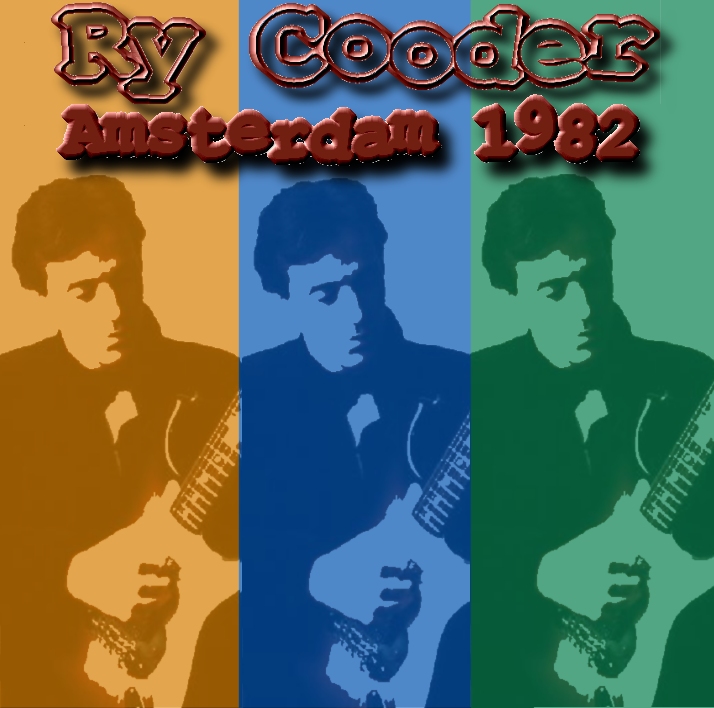
Ry Cooder - Amsterdam 1982


Ry Cooder - Amsterdam 1982
FM Broadcast Carré Theatre, Amsterdam The Netherlands May 7 1982


Track Listing:
1. Little Sister
2. Go Home Girl
3. Denomination Blues
4. Down In The Boondocks
5. How Can A Poor Man
6. Blue Suede Shoes
7. Christian Automobile
8. Crazy About An Automobile
9. Down In Hollywood
10. Outro


Personnel:
Jim Keltner - drums
Ry Cooder - guitar, mandolin, vocals
Jim Dickinson - keyboards
Chris Etheridge - bass
George "Baboo" Pierre - percussion
William D. "Smitty" Smith - organ
Bobby King, Pico Payne. Willie Green Jr - vocals


Sunday, July 21, 2013

Jerri Bo Keno - Here It Comes (And Here I Go)


Jerri Bo Keno - Here It Comes (And Here I Go) / I Don't Know Why
Phil Spector International 2010 001 (1975)


Side One:
Here It Comes (And Here I Go)


Side Two:
I Don't Know Why


Personnel:
Jim Keltner - drums
Jerri Bo Keno - vocals
Nino Tempo - arranger
Phil Spector - producer
Jesse Ed Davis - guitar
Hal Blaine - drums
Terry Gibbs - vibraphone
Barney Kessel - guitar
Dion DiMucci - guitar